Friday, July 13, 2012

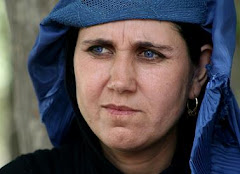
We Must not Abandon our Commitment to Afghan Women


According to UN figures, a staggering 87% of Afghan women suffer domestic violence, and the scandal of marrying off very young daughters to much older, often abusive, men continues.
">The conference pledged over £10bn in funds for development in Afghanistan, with the UK one of the largest donors. This money will be vital in helping to shore up the fragile gains made over infrastructural development and human rights during the past 10 years. In particular, after the fresh horror of the video apparently showing the public execution of a young Afghan woman for adultery by Taliban gunmen, fears for the future of Afghanistan's women are growing.
Understandably women in Afghanistan are scared. They are scared that in all the political horse-trading that will occur as the international community begins its withdrawal from Afghanistan by the end of 2014, their rights will be sacrificed in the rush for the exit.
Let's not forget, significant progress on women's rights has been made. We can already be proud that UK aid to Afghanistan means that it is now possible for many girls to go to school and for women to take part in public life. And in case anyone thinks this money might be disappearing into some warlord's pocket - take a look at the numbers. Women now make up 27% of the Afghan parliament (it's 22% in our own parliament, in case you were wondering) and some 2.7 million girls are now at school in Afghanistan (under the Taliban it was virtually zero).
;">It must never be forgotten in all our rhetoric about a political solution that during their five years in power, the Taliban imposed a reign of terror on Afghan women. Women and girls were prisoners in their own homes, communities and towns. Afghanistan was hostile territory for women simply because they were women. The horrific abuses these women faced on a daily basis under the Taliban shocked the world and were one of the primary justifications for military interventions in 2001.
Without doubt progress has been hard-won, through bloody and tragic sacrifices made often by our own servicemen and women in combat, and often by brave Afghan civil rights campaigners both male and female - but during the past decade women's rights in Afghanistan have made great strides. There is no doubt, however, the job is not finished and the underlying statistics still make for grim reading and show just how easily all this work and promise could be undone if we don't get the leaving right. Because even now, Afghanistan remains one of the world's most dangerous places to be a woman. The maternal mortality rate is one of the highest in the world - an Afghan woman dies every two hours due to pregnancy-related causes. According to UN figures, a staggering 87% of Afghan women suffer domestic violence, and the scandal of marrying off very young daughters to much older, often abusive, men continues.
The Taliban and other armed groups have by no means relinquished control and still cast a dark shadow over women's lives in many parts of Afghanistan. Women in rural areas, particularly in the more conservative southern provinces and areas under de facto Taliban control, are being denied employment, freedom of movement and political participation.
High-profile female officials and human rights defenders have been killed simply for exercising their own rights or for defending the rights of others. These have included Malalai Kakar, the highest-ranking female police officer in Kandahar (she led a ten-woman police unit focused on domestic violence) shot dead by the Taliban on her way to work early one morning in 2008.
On top of targeted killings much-needed legislation like 2009's Law on the Elimination of Violence against Women is unfortunately having virtually no impact, with little or no willingness to implement them from the police or courts. In fact, women who report violence face being accused of crimes themselves. The most infamous case is that of Gulnaz, a young woman raped by her cousin's husband and then jailed for 12 years after she became pregnant. Like an estimated 400 women in Afghanistan, Gulnaz was imprisoned for a so-called "moral crime" and it took an unprecedented international campaign to win this one woman a presidential pardon last year.
As the date for the withdrawal of troops draws nearer and the jostling for political positions intensifies, the situation for women in Afghanistan has deteriorated. Hard-won gains are under sustained attack from conservative officials, religious bodies and insurgent groups. In the provinces of Ghazni, Logar and Wardak, for example, Amnesty International has talked to female officials who say that the direct threats from the Taliban are preventing them from travelling outside of the provincial centres and that most of the progress in girls' education and women's access to basic government services has been reversed.
The state of women's rights in Afghanistan is now at a critical crossroads. Surveys show there is widespread fear among Afghan women that their government and its international partners will trade away their rights in a cynical attempt to barter some kind of political settlement with insurgent groups ahead of the international military pull-out in 2014. The UK has a pivotal role to play. We have pledged to put women and girls at the heart of our international aid strategy. There is no other place where it is more critical to do so than Afghanistan. The Tokyo Conference is a vital opportunity for the UK to prove that our commitment to the women of Afghanistan in 2001 was not simply empty rhetoric.

Sunday, July 8, 2012

Too Young to Wed: The Secret World of Child Brides

Saturday, July 7, 2012

Taliban publicly execute woman near Kabul: officials

 A man Afghan officials say is a member of the Taliban shot dead a woman accused of adultery in front of a crowd near Kabul, a video obtained by Reuters showed, a sign that the austere Islamist group dictates law even near the Afghan capital.
In the three-minute video, a turban-clad man approaches a woman kneeling in the dirt and shoots her five times at close range with an automatic rifle, to cheers of jubilation from the 150 or so men watching in a village in Parwan province.
"Allah warns us not to get close to adultery because it's the wrong way," another man says as the shooter gets closer to the woman. "It is the order of Allah that she be executed".
Provincial Governor Basir Salangi said the video, obtained on Saturday, was shot a week ago in the village of Qimchok in Shinwari district, about an hour's drive from Kabul.
Such rare public punishment was a painful reminder to Afghan authorities of the Taliban's 1996-2001 period in power, and it raised concern about the treatment of Afghan women 11 years into the NATO-led war against Taliban insurgents.
"When I saw this video, I closed my eyes ... The woman was not guilty; the Taliban are guilty," Salangi told Reuters.
When the unnamed woman, most of her body tightly wrapped in a shawl, fell sideways after being shot several times in the head, the spectators chanted: "Long live the Afghan mujahideen! (Islamist fighters)", a name the Taliban use for themselves.
The Taliban could not be reached for comment.
Despite the presence of over 130,000 foreign troops and 300,000 Afghan soldiers and police, the Taliban have managed to resurge beyond their traditional bastions of the south and east, extending their reach into once more peaceful areas like Parwan.
HARD-WON WOMEN'S RIGHTS IN JEOPARDY?
Afghan women have won back basic rights in education, voting and work since the Taliban, who deemed them un-Islamic for women, were toppled by U.S.-backed Afghan forces in late 2001.
But fears are rising among Afghan women, some lawmakers and rights activists that such freedoms could be traded away as the Afghan government and the United States pursue talks with the Taliban to secure a peaceful end to the war.
Violence against women has increased sharply in the past year, according to Afghanistan's independent human rights commission. Activists say there is waning interest in women's rights on the part of President Hamid Karzai's government.
"After 10 years (of foreign intervention), and only a few kilometres from Kabul... how could this happen in front of all these people?" female lawmaker Fawzia Koofi said of the public execution in Parwan.
"This is happening under a government that claims to have made so much progress in women's rights, claims to have changed women's lives, and this is unacceptable. It is a huge step backwards," said Koofi, a campaigner for girls' education who wants to run in the 2014 presidential election.
Salangi said two Taliban commanders were sexually involved with the woman in Parwan, either through rape or romantically, and decided to torture her and then kill her to settle a dispute between the two of them.
"They are outlaws, murderers, and like savages they killed the woman," he said, adding that the Taliban exerted considerable sway in his province.
Earlier this week a 30-year-old woman and two of her children were beheaded in easternAfghanistan by a man police said was her divorced husband, the latest of a string of so-called "honour killings".
Some Afghans still refer to Taliban courts for settling disputes, viewing government bodies as corrupt or unreliable. The courts use sharia (Islamic law), which prescribes punishments such as stonings and executions.
(Additional reporting and writing by Amie Ferris-Rotman; Editing by Mark Heinrich)

Wednesday, July 4, 2012

Man kills three member of his family


Local officials in Ghazni said a man in an unprecedented crime in Ghazni province killed his wife, son and daughter by knife.
Shukrea Wali, head of provincial women affairs department by confirming the incident said that the victims include a 30 year old divorced woman, Hakim an eight year old boy and Setara the ten year old girl.

Head of women affairs department of Ghazni province said “dead bodies have been taken to hospital” she added that the woman and her son’s and girl’s are likely to have been murdered by her husband.
Chief of provincial women affairs department said “the women had been beaten by her husband last year which let to divorce between them”. She adds that it has been a year that the woman was living with her three children in the Third plan are of Ghazni city.
Head of provincial women affairs department said “woman`s husband is an addicted and he also had beaten her wife many times last year”
Meanwhile, Baz Mohammad Hemmat, head of Ghazni civilian hospital in a news conference said that the dead bodies were taken to hospital at early hours of morning today.
Earlier, Mohammad Hussain, head of Ghazni police told Bokhdi News Agency that the escaped father of the family is the accused and police department is trying to arrest him and hand him over to justice.  

Monday, July 2, 2012

Justice Minister Apologises for Derogatory Remarks on Women Shelters

Afghanistan's Minister of Justice Habibullah Ghaleb apologised for statements he made last week calling women's shelters "centers of misconduct" and suggesting that women residing in them were prostitutes.

Ghaleb expressed his regrets for his provocative remarks at a press conference in Kabul.

"I again emphasise that if the women, who are my daughters and sisters, have been upset by me, I as their father and older brother apologise, not once, but a thousand times," he said on Sunday.

Ghaleb had made the comment on the shelters at a conference organised by the Afghan parliament's Women's Affairs Committee.

He told delegates that the 250 women living in foreign-funded shelters across the country were being encouraged to disobey their parents.

"Mostly they were encouraging girls, saying, 'If your father says anything bad to you don't listen to him, if your mother says anything to you don't listen to them.

There are safe houses for you where you can stay.' What safe houses? What sort of immorality and prostitution is happening at these places?" he said.

His comments received widespread condemnation from women-related organisations across Afghanistan and calls for President Hamid Karzai to sack him.

EU foreign minister Baroness Ashton said last week that she was "deeply troubled" by Ghaleb's comments which had only served to undermine efforts to protect women from violence and sexual abuse.

"Too many Afghan women have experienced violence, gender based and sexual, often on a repeated basis," she said in a statement. "Women forced to resort to shelters are amongst the bravest Afghans we know."

Tuesday, June 26, 2012

Taliban killed five family members in Helmand province

Most of the time when the local people cooperate with the central government or receive any help from the government they come under the attack of the Taliban.
In the recent incident in Sangin district of southern province of Helamand Taliban killed five members of a family.
Dawood Ahmadi provincial governor spokesman confirmed and told Bokhdi News Agency: “last night Taliban entered in a residential house in this district shot and killed five members of this family”.
It comes the time that this family one day prior to this as they were killed received a few bags of formed seed on behalf of Helmand Agriculture and Irrigation Department. 
Ahmadi added initial investigation show the reason behind this incident is the distribution of formed seed but he declined to give further details onward and said, it needs more investigation.
Helmand province is located in the south part of the country and in its some part the Taliban groups have active presence.
Most of the time when the local people cooperate with the central government or receive any help from the government they come under the attack of the Taliban. 
Recently Helmand agriculture and irrigation department distributed a few bags of formed seed of wheat among the residential people of Sangin district to encourage the people to do not cultivate poppy in their farmland.
Elham Sorosh-Helmand

Monday, June 25, 2012

Top Afghan lawyer Kabir Ranjbar arrested on rape charge


A PROMINENT Afghan lawyer close to a possible presidential candidate has been arrested on charges of kidnapping and raping a woman.
Kabir Ranjbar, the president of the Afghan Lawyers' Union and a former member of parliament, was detained on Saturday, deputy attorney-general Rahmatullah Nazari said.
Mr Nazari said the woman, now aged 20, was kidnapped from Dehsabz district, northeast of Kabul, about two and a half years ago and held at the home of Mr Ranjbar's niece.
Mr Ranjbar, a familiar face on Afghan television talk shows, allegedly got the woman drunk and raped her, the prosecutor said, and two months ago she gave birth to his child.
"I can confirm Kabir Ranjbar, a former Kabul MP in the lower house of parliament, has been arrested by the attorney-general's office yesterday, accused of kidnapping and raping a girl," Mr Nazari said, adding that the investigation was at an early stage.
Mr Ranjbar is a key member of the Right and Justice Party, led by ex-interior minister Hanif Atmar, who is seen as a potential candidate for the presidential election in 2014

Tuesday, December 6, 2011

Afghanistan bombs kill 58 in Kabul and Mazar-i-Sharif

Twin attacks apparently targeting Shia Muslims have killed at least 58 people in Afghanistan. In the deadliest incident, a suspected suicide bomb struck a shrine packed with worshippers in the capital, Kabul, killing at least 54.
Another blast hit the northern city of Mazar-i-Sharif at about the same time, killing four people.
The attacks appear to be of a sectarian nature unprecedented in recent Afghan history, correspondents say.
They coincided with the Shia Muslim festival of Ashura - the most important day in the Shia calendar and marked with a public holiday in Afghanistan.
Ashura is the climax of Muharram, the month of mourning for the martyrdom of the Prophet Muhammad's grandson.
The police have cordoned off all roads to the blast site in the medieval Murad Khani district where many Shias had gathered to commemorate Ashura at the Abu Fazal mosque.
Here, at an emergency surgical centre just 10 minutes from the site, people are gathered crying and wailing. I have heard women shouting: "My son is dead, my son is dead." I have seen people with charred clothing.
Security forces have been ferrying victims to waiting ambulances. There are many wounded too. Those who were there say there are a lot of casualties. People are gathering in front of the hospital and the police are on the streets around here controlling the traffic.
Children hit
The near-simultaneous explosions happened at about midday (07:30 GMT).
In Kabul, the bomb went off near a gathering of hundreds of Shias singing at the Abu Fazal shrine.
Fifty-four people were killed in the blast, said health ministry spokesman Norughli Kargar, while 150 were injured.
"It was very loud. My ears went deaf and I was blown three metres [yards]," Mustafa, who uses only one name, told Associated Press news agency.
"There was smoke and red blood on the floor of the shrine. There were people lying everywhere."

Amid the chaos straight after the blast, a young girl, dressed in a green shalwar kameez (traditional dress) smeared in blood, stood shrieking, surrounded by the crumpled, piled-up bodies of children, AFP reported.
Afghan President Hamid Karzai spoke of the unprecedented nature of the attack, saying it was "the first time that, on such an important religious day in Afghanistan, terrorism of that horrible nature is taking place".
No-one had claimed to have carried out the attacks, said Mohammad Zahir, head of Kabul's criminal investigation department.
A Taliban statement said the group had not been behind either incident.
Police said they foiled another attack elsewhere in the capital.
The bomb which exploded near the main mosque in Mazar-i-Sharif was apparently strapped to a bicycle, and went off shortly after the Kabul blast.
Balkh province Deputy Police Chief Abdul Raouf Taj said the device exploded as a convoy of Shias, shouting in celebration of Ashura, passed by, AP reported.
At least 17 people were injured.
Elsewhere, police said at least three people were wounded by a motorcycle bomb in the southern city of Kandahar, the Taliban's heartland - but it appears to have been unconnected to the other two attacks.
Rarity
Mohammad Bakir Shaikzada, the top Shiite cleric in Kabul, said he could not remember a similar attack on such a scale.
"This is a crime against Muslims during the holy day of Ashura," he told AP.
"We Muslims will never forget these attacks. It is the enemy of the Muslims who are carrying them out," he said, though he would not speculate on who might be responsible.
There are tensions between Sunni and minority Shia Muslims in Afghanistan, but violence of the type seen in Pakistan or Iraq is rare, the BBC's Quentin Sommerville in Kabul says.
Over the past decade Shias in Afghanistan have celebrated their festivals more confidently, openly and on a bigger scale than ever before.
The attacks come a day after an international conference on Afghanistan's future was held, in the German city of Bonn.
Pakistan boycotted the conference, after a Nato attack killed 24 of its troops at a checkpoint near the Afghan border last month.
Afghan security officials held their breath during the conference, our correspondent says, fearing there might an attack in Kabul to divert attention.
Afghan President Hamid Karzai has condemned the bomb attacks.
Are you in Kabul? Were you in the area? Did you witness anything? Send us your comments and experiences.

Tuesday, April 5, 2011

US Soldiers Killing Civilians

Friday, April 1, 2011

Statement attributable to the Secretary-General

Statement attributable to the Secretary-General 
concerning the attack against the UNAMA compound in Mazar-i-Sharif


1 April 2011 - I condemn in the strongest terms the outrageous and cowardly attack against the United Nations office in Mazar-i-Sharif in Afghanistan. Our reports are still preliminary, but it appears that three United Nations international staff as well as four international security officers were killed in the attack. My Special Representative, Staffan de Mistura, has travelled to Mazar-i-Sharif and is personally overseeing the investigation.

Those who lost their lives in today’s attack were dedicated to the cause of peace in Afghanistan and to a better life for all Afghans. These brave men and women were working in the best tradition of the United Nations and gave their lives in the service of humanity.

I express my sincere condolences to the families and colleagues of those who were lost and call on the Afghan Government to thoroughly investigate this incident and bring its perpetrators to justice.

Nairobi/New York; 1 April 2011

UN staff killed during protest in northern Afghanistan

At least seven foreign UN workers have been killed after protesters stormed a UN compound in the Afghan city of Mazar-e Sharif, officials say.

The compound was set alight as hundreds protested over the burning of the Koran in a US church last month. Several demonstrators were killed by guards.

Witnesses said the protest began peacefully but suddenly turned violent.

A local police spokesman told the BBC the city was now under control and a number of people had been arrested.

Dan McNorton, spokesman for the UN mission in Afghanistan, said: "Three international Unama (United Nations Assistance Mission in Afghanistan) staff members were killed, and four international armed security guards were killed."

Initial reports said eight foreign UN workers had died.

Swedish Foreign Minister Carl Bildt later confirmed that one of the dead was a Swede, 27-year-old UN worker Joakim Dungel.

The Norwegian defence ministry said another of those killed was Lt Col Siri Skare, a 53-year-old female pilot. The other foreign victims are believed to be a Romanian and four Nepalese guards.

UN Secretary General Ban Ki-moon described it as "an outrageous and cowardly attack".

Continue reading the main story
Analysis

Bilal Sarwary
BBC News
Mazar-e Sharif is one of Afghanistan's largest cities - as well as one of its safest. Just last week, thousands peacefully celebrated the Persian new year.

The city is on a list of areas to be handed to full Afghan security control later this year. The attack on the UN compound raises serious questions about that plan.

A state of emergency has now been declared in the city, Afghan intelligence sources told the BBC. All roads in and out of Mazar have been blocked and cars are being checked. Special army and police units have been deployed to prevent further unrest.

The authorities are well aware of the dangers of protests spreading. In 2006, anger at cartoons depicting the Prophet Muhammad in a Danish newspaper swept across Afghanistan. Dozens were killed or injured.

US President Barack Obama also condemned the attack "in the strongest possible terms", saying the work of the UN "is essential to building a stronger Afghanistan".

The top UN representative in Afghanistan, Staffan De Mistura, has flown to the area to handle the matter.

Weapons seized
Witnesses said a crowd of several hundred staged a protest outside the Blue Mosque in the city after Friday prayers.

The crowds moved to outside the UN compound, where a small group broke away.

Munir Ahmad Farhad, a spokesman for Balkh province, said the group seized weapons from the guards and opened fire before storming the building.

Local police spokesman Lal Mohammad Ahmadzai told the BBC the attackers had used guns and knives.

He also told reporters that two of the dead UN staff were beheaded.

However, police Gen Abdul Rafu Taj said that "according to the initial reports... none were beheaded". He said they were shot in the head.

A number of suspected attackers have been arrested.

Officials have declared an emergency in the city - major roads in and out have been blocked.

'Hunted down'
Kieran Dwyer, director of communications for the UN mission in Afghanistan, said the UN workers had been trapped inside the compound and "hunted down" in what was an "overwhelming situation".

"These are civilian people, unarmed, here to do human rights work, to work for peace in Afghanistan - they were not prepared for this situation," he told the BBC.

Cannot play media.You do not have the correct version of the flash player. Download the correct version

Farhan Haq of the UN said the organisation was still trying to establish the circumstances on the ground
Mr Dwyer said it was too early to tell how the attack happened or why the UN was targeted, but that the organisation would now take extra security measures.

But he added: "The UN is here to stay. We're here to work with the people to help them achieve peace, and this sort of thing just highlights how important that is."

On 20 March, Pastor Wayne Sapp set light to a copy of the Koran at a church in Florida.

The burning took place under the supervision of Terry Jones, another US pastor who last year drew condemnation over his aborted plan to burn copies of the Koran on the anniversary of the 9/11 attacks.

Protests were held in several other Afghan cities on Friday - which demonstrators in Herat had called a "day of anger", Afghanistan's Noor TV channel reports.

The BBC's Paul Wood in Kabul says Mazar-e Sharif is known to be a relatively peaceful part of the country, but that the Florida incident will raise questions of whether the city will be able to make the transition from foreign to Afghan security control later this year.

Our correspondent says that in a deeply religiously conservative country such as Afghanistan, that act has the power to inflame passions in otherwise peaceful areas.

Mr Jones told the BBC he was not responsible for the actions of the protesters.

Tuesday, March 29, 2011

The Kill Team, kill Haji

How U.S. soldiers in Afghanistan murdered innocent civilians and mutilated their corpses – and how their officers failed to stop them. Plus: An exclusive look at the war crime photos censored by the Pentagon.


Early last year, after six hard months soldiering in Afghanistan, a group of American infantrymen reached a momentous decision: It was finally time to kill a haji. Among the men of Bravo Company, the notion of killing an Afghan civilian had been the subject of countless conversations, during lunchtime chats and late-night bull sessions. For weeks, they had weighed the ethics of bagging "savages" and debated the probability of getting caught. Some of them agonized over the idea; others were gung-ho from the start. But not long after the New Year, as winter descended on the arid plains of Kandahar Province, they agreed to stop talking and actually pull the trigger. Bravo Company had been stationed in the area since summer, struggling, with little success, to root out the Taliban and establish an American presence in one of the most violent and lawless regions of the country. On the morning of January 15th, the company's 3rd Platoon – part of the 5th Stryker Brigade, based out of Tacoma, Washington – left the mini-metropolis of tents and trailers at Forward Operating Base Ramrod in a convoy of armored Stryker troop carriers. The massive, eight-wheeled trucks surged across wide, vacant stretches of desert, until they came to La Mohammad Kalay, an isolated farming village tucked away behind a few poppy fields. to provide perimeter security, the soldiers parked the Strykers at the outskirts of the settlement, which was nothing more than a warren of mud-and-straw compounds. Then they set out on foot. Local villagers were suspected of supporting the Taliban, providing a safe haven for strikes against U.S. troops. But as the soldiers of 3rd Platoon walked through the alleys of La Mohammad Kalay, they saw no armed fighters, no evidence of enemy positions. Instead, they were greeted by a frustratingly familiar sight: destitute Afghan farmers living without electricity or running water; bearded men with poor teeth in tattered traditional clothes; young kids eager for candy and money. It was impossible to tell which, if any, of the villagers were sympathetic to the Taliban. The insurgents, for their part, preferred to stay hidden from American troops, striking from a distance with IEDs. While the officers of 3rd Platoon peeled off to talk to a village elder inside a compound, two soldiers walked away from the unit until they reached the far edge of the village. There, in a nearby poppy field, they began looking for someone to kill. "The general consensus was, if we are going to do something that fucking crazy, no one wanted anybody around to witness it," one of the men later told Army investigators. The poppy plants were still low to the ground at that time of year. The two soldiers, Cpl. Jeremy Morlock and Pfc. Andrew Holmes, saw a young farmer who was working by himself among the spiky shoots. Off in the distance, a few other soldiers stood sentry. But the farmer was the only Afghan in sight. With no one around to witness, the timing was right. And just like that, they picked him for execution. He was a smooth-faced kid, about 15 years old. Not much younger than they were: Morlock was 21, Holmes was 19. His name, they would later learn, was Gul Mudin, a common name in Afghanistan. He was wearing a little cap and a Western-style green jacket. He held nothing in his hand that could be interpreted as a weapon, not even a shovel. The expression on his face was welcoming. "He was not a threat," Morlock later confessed.

Planting Trees, Burning Candles


by Steve Clemens In the morning we walked in groups of five for about 30-45 minutes through our area of Kabul en route to our morning activity. I awoke at 4 AM to use the bathroom and when the call to prayer was broadcast from the nearby mosque about 40 minutes later, I knew it was time to get up because the dogs on the street also joined the chorus. The city is fairly dirty (what does one expect in one of the poorest countries in the world which is at war with the world’s largest military machines?) and the traffic has no street lights or road striping so the cars switch invisible lanes as the pedestrians dodge and move between them. Vendors crowd the sidewalk selling fruit, live chickens, freshly butchered meat, nuts, beans, and a multitude of other items. We travel in groups of 4 or 5 – always escorted by one of the Afghan Youth Peace Volunteers. I know I shouldn’t have favorites - they are all so wonderful and helpful – but I can’t help but respond most to 13 year-old Gholami, the youngest and smallest of the 8 who have joined us for several days. We walk in small groups so we blend in a little more than if we all walk together. About half of the International Peace Delegation is staying at a hotel, others of us are sleeping on the floor in the office building of a non-profit organization that has joined with AYPV in inviting us. After walking down two main streets, we branch off into what seems to be a side street which more resembles an alley with an open sewer/gutter on one side. As cars or trucks pass us they blow their horns so we can step aside. Vans come by with other delegates from the hotel and we are offered rides but Simon and I prefer to walk with several of the boys, enjoying the sunshine and “fresh air”. Actually, the air is often quite polluted with fumes from older, untuned vehicles. We walk purposefully and deliberately so as to not draw undue attention, despite our pale complexions. (Simon, from Australia, is fairer-skinned than me.) Since most of the others arrived before us, we missed part of the presentation at the private school which was our destination. Lena, the teacher who addressed our group at the school, was a young woman who described the school and answered our questions. We had “one cup of tea” (we could have had more if we wished – even 3 Cups of Tea) but were told what Afghanistan needs is not more money to build schools but rather to have teachers properly trained. Having school buildings does no good without trained teachers. And teachers have to be paid a wage they can live with. The public school teachers are not paid enough and often have class sizes of 50-70 students – an impossible situation to help students learn at the grade school level. This private school had 20-25 students per class and it appeared to me at the recess time that the predominance was girls at this school. When asked about whether the US military is needed for security, both the school’s principal and the teacher quickly said they wanted the US troops to leave. Lena added that “we need to make peace by ourselves” – it is not something that can be imposed from the outside. She continued, “Instead of waging war [here], the US could concentrate on education instead”, using the incredible amounts of money to train teachers. The AYPV had picked this school for the tree-planting opportunity as a way to symbolically celebrate the New Year which would begin two days hence on the first day of Spring. Afghans are about to begin Year 1390 – their calendar, like that it many other Muslim-dominated nations, is dated from the time of their Prophet Mohammad. Students at the school drew or painted pictures of trees as an art project to celebrate the tree-planting event in their schoolyard. Before we moved to the schoolyard to plant the trees, Hakim and the AYPV boys recited a poem they wrote the night before, “We Need a Different Tree” – a moving statement of choosing peace over war. It lamented how “power and privilege oppress the people – it is perfected in war. … Why would an Afghan mother want a tree that kills? … War is not a tree we want to plant – so, if we wish to live without war, we need to plant a different tree.” Then 55 trees, almond, poplar, plum, apricot, and apple, were placed in the already-dug holes provided. A local man pruned them after they were planted and watered. As we finished, the children were let out of the classrooms for recess/exercise and they were enamored at the visitors to their school; some loved posing for photos, other avoided our cameras. The school principal announced that the garden/schoolyard would be re-named “The Friendship Garden.” The van ride back to our office space –like all rides in the Kabul traffic – was another adventure. Just when you think the driver will hit a bike rider or pedestrian, scrape an on-coming car or one that you are passing, the brakes are applied or the steering wheel turned to prevent the accident. Any insurance agency would have to be crazy to cover someone for collision –although I don’t seem much beyond very close calls. It makes rush hour in the Twin Cities look positively relaxing. Next on the day’s list (after a light lunch) was to drive to the Emergency Medical Hospital for civilian war casualties operated by an Italian NGO to donate our blood. (Ironically, I was told in Minneapolis before I left that I will not be able to donate platelets for a full year if I travel to Afghanistan due to threat of malaria – even though the threat doesn’t arrive until May, long after I’ve left.) My group had some difficulty getting a taxi to the hospital so we missed most of the tour and discovered that they only needed O negative blood that day. Two of us met that requirement but Kathy, who was one of the two, was asked to wait a couple of weeks since she gave at that hospital only several weeks before. She will donate again before she returns to Chicago in a couple of weeks. Returning to the office, we had a convoy of 5 huge armored tan vehicles of the International Security Assistance Forces (ISAF) pass us. Even though there were no US markings, it is clear to everyone who is in sight that these behemoths are the dinosaurs of the crumbling American empire – unfortunately still very deadly in its decline. Later in the afternoon, we walked to the 3rd Eye Photojournalism Center, the host organization for the candlelight vigil in remembrance of the victims of war. A stunning gallery of wonderful photos taken from all over Afghanistan graced the walls of the four rooms and a table with candles encircling a banner reading “For the War’s Victims” in both English and Dari. After a few moving talks and the reading of the names of the 7 boys who were killed earlier this month in one of the northern provinces, the AYPV boys lit candles and passed them to all of us and we observed 2 minutes of silence in memory of all of war’s victims. Many of us felt tears welling up knowing that two of the boys present had lost their father to the Taliban several years ago. I am amazed at their courage and commitment. At dinner afterward, I had a great conversation with Zahra, yesterday’s moving speaker from the Open Society, deeply moved by this 23 year old women who refuses to wear the veil except when she is outdoors. She has many questions for me – why I came here, what do I think about Afghanistan, what other Americans think about the war, … . I’m sure we will have several more conversations before our week’s end. Having gotten up before dawn, I was very grateful for the air mattress and sleeping bag at 9 PM. I am so grateful for so many friends who have supported me/us on this pilgrimage/journey for peace.

Finding hope in Afghanistan

In a country torn by thirty years of war, where the promise of peace continues to be broken, despair and resignation seem to be the norm for Afghan society. War – and its corollaries of social decay, poverty, corruption, and trauma – does not discriminate. Not a family in Afghanistan has been left unaffected by the death or disappearance of a loved one and the daily, traumatizing stress of living in an occupied war zone. Billions of aid intended for reconstruction has been siphoned off leaving little left over for meaningful, local development. Afghanistan is an unstable society wracked by corruption at nearly every level of government and a pervasive distrust of strangers and neighbors alike is the expectant result of such disintegration of social ties. But as the late Studs Terkel reminds us, “hope dies last.” And this is certainly true for the Afghan Youth Peace Volunteers, a small but growing group of young Afghans committed to a life of peace in the midst of so much violence. While cynicism and disbelief run deep across generations, the AYPVs have an alternative vision for their country embedded deep in their hearts – and they believe this hope for peace is already in the heart of every Afghan. Organized by the AYPVs, twenty-five international partners joined together with over fifty ordinary Afghans on Saturday to declare a commitment to an Afghanistan without war with fifty-five young saplings to mark the beginning of a new year in Afghanistan. The various apple, apricot, and almond trees were planted in a Kabul elementary and high school as a sign of hope and promise of peace. The previous day, the AYPVS along with members of the Open Society organized and participated in an inter-ethnic walk for an end to the war. As far as anyone can tell, this is the first public gathering calling for peace in Afghanistan that is not politically aligned or sponsored. The bright blue scarves of the AYPVs, their smiles and words of gratitude to the accompanying riot police, and banners denouncing warmongering is a considerable different message that most Kabulis are not used to seeing or hearing. The steadfast commitment to nonviolence of the AYPVs and their deep desire for peace offers a kind of hope that is unheard of in Afghanistan but it also offers a breath of fresh air. Slowly but surely the AYPVs and their partners – both Afghan and international – are growing into a sizable community with a peace-filled vision for Afghanistan. The planting of trees is a small gesture indeed and the challenges for ending the foreign occupation of Afghanistan, confronting corruption and human rights abuses (particularly of women), and promoting a culture of peace are many. But the planting of trees is a beginning and it may very well be the birth of a movement that transforms Afghanistan. Afghanistan War

Saturday, February 5, 2011

Afghanistan stifled freedom!

By Kelsey Meehan

Since October 2001, Afghanistan has been occupied by the International Security Assistance Force (ISAF). This group, comprised of both NATO and non-NATO member nations, has been in action in an attempt to bring aid to the Afghan people and rid the country of Taliban and al Qaeda forces. Their main goal has been to bring freedom to Afghanistan and its citizens.

Yet, throughout these last seven years, freedom of speech and expression in Afghanistan has been repeatedly called into question by these occupying forces, including Canada.

The government, militant groups such as the Taliban and erupting conflicts between the two group’s opposing views of the constitution has created an extremely difficult environment within the country for the average citizen.

Currently there are two main factors from the constitution of Afghanistan that set in motion the entire discourse on freedom of expression. Firstly, the religion sections of the constitution, Articles’ 2 and 3, states that people are free to exercise their faith and perform their religious rights ‘within the limits of the law’.

Article 34 of the constitution states that freedom of expression ‘shall be invaluable'. Every Afghan shall have the right to express thoughts through speech, writing, illustrations, as well as other means in accordance with provisions of this constitution. Every Afghan shall have the right to print and publish on subjects without prior submission to state authorities.

But Dastageer Sakhizai, workforce planning branch consultant for the government of Saskatchewan who moved to Canada from Afghanistan 10 years ago, knows first hand the struggle people in Afghanistan go through every day to make their voices heard.

“There is no mention of freedom of consciousness within the constitution,” said Sakhizai.

In fact, apostasy from Islam is punishable by death as stated by both the constitution and under the rule of Sharia law.

The second main force of opposition against freedom of speech and expression in the country is one that has received much attention across the globe—the Taliban.

When any coverage in the press appears about opposition parties in Afghanistan, traditionally the Taliban are not included in this group. Even as the largest opposition group in the country and across the region, the Taliban are seen traditionally as holding only military or militant power, not political. But Taliban are in fact included in the long list of official political parties in Afghanistan, and are therefore by all rights allowed to be a part of the countries political process.
“It’s like they [the Taliban] don’t exist. Now, ironically, the whole West is pushing for negotiations with Taliban,” said Sakhizai.

At this point the Taliban are gaining power in the country politically, to the point that other parties in positions of power are seeking their approval and ‘blessing’. And Taliban have been the most prominent force against freedom of speech and expression in the country, implementing a highly strict form of Sharia law.

Bloggers like Basir Seeratmust overcome the risks of punishment for expressing their views about their country and the world online.

“The state has formulated the rules in which freedom of expression has significantly been safeguarded,” said Seerat, a blogger and photojournalist from Kabul.

The blocking factor of freedom of expression over the years has merely been the ‘Sharia-oriented’ vision by some religious leaders.

The Sharia law, or Islamic religious law, follows the guidelines and teachings found in the Koran, and often comes into conflict with the constitution of Afghanistan—particularly the article pertaining to civil and human rights. While the constitution mandates that people can print or publish their opinions freely, the rule of Islamic law does not permit publishing any material that is deemed against Islam itself.

Seerat has experienced this contradiction first-hand as a photojournalist. He spent 10 days in Taliban captivity for his attempts at shooting a documentary on a female political candidate attempting to break though in a male-dominated culture.

The future of freedom of expression in Afghanistan will no doubt be filled with challenges and risks like the ones Seerat has experienced. As the Taliban continues to grow and evolve into a younger, tech-savvy and increasingly more violent political power, more voices will be silenced and snuffed out.

Thursday, December 30, 2010


Afghanistan - The People’s December Review
December 25, 2010


In the first person voice of Abdulai, a fifteen year old Afghan boy whose father was killed by the Taliban:

“The place where I live is the worst place on earth in which to be born . Good thing my mother survived her pregnancies . But my father -- he didn’t survive the war. Isn’t it strange that there is a graveyard marked out especially for children in my small remote mountain village? A quarter of all children do not live beyond five years of age and they are buried there; we already have to find new space because the graveyard is filled. As 42 percent of Afghans live in poverty , my family could not afford a proper grave for my father for five years. My father would have understood our predicament: in a land with the worst food risk in the world , we make do with whatever food and clean water we can get. Since we don’t have electricity , we are grateful for diesel lamps. And most importantly, my father would have understood that we still struggle to stay away from the killings.

Since War World II, wars have killed mainly civilians and this war in Afghanistan is no exception. In fact, we now have nowhere to turn and nowhere to hide . We face night raids , computerized aerial bombings and the armed players who neither recognize our language nor our faces.

Many of our families and friends have sought refuge in far-away places . What can our people do? Wait to die of sickness or violence? Be pawns in the warlords’ games? I made hand-sewn leather cell-phone peace pouches for our ‘brothers’ and ‘sisters’ in Kandahar and I know that before the NATO commander had launched the current offensive there, 94% of Kandaharis said they wanted peace talks , not war. But the US led coalition went ahead and launched its deadly military operation. They proved their utterly un-democratic, unimaginative addiction to an unchanging military solution.

Karzai said that more than 42 percent of children in Afghanistan still have no access to schooling : at least, that’s not as fatal as the three children killed daily in the conflict last year . If you don’t grasp how the Afghan state is the third most corrupt in the world , come take our school exams to experience the rampant bribery and cheating this war encourages. Like other war-torn countries, the influx of weapons and un-accounted monetary aid fosters corruption, fuelling deceit at all levels of our society.

Drugs made from poppies grown in our country are everywhere, with more than a million drug addicts in country . Perhaps, being doped is better than putting up with our sheer lack of work and recourse to government services or justice. Last year, estimates are that we Afghans had to pay $2.49 billion dollars in bribes to our own government officials , which is equivalent to 23% of our country’s GDP.

But heck it….we don’t even want your money! Two billion of which you spend on the military weekly and the remaining dirty trickle cannot even be accounted for by your Special Inspector General for Afghanistan Reconstruction (SIGAR) .

My mother and sister say to you that you can forget about promoting ‘women’s rights’ with your uniformed pride. Last year, there were 2300 suicides related to depression among women and girls . And don’t ever claim that a military strategy can stop them from taking their lives. Neither the US-NATO coalition nor our warlords can, with their violence, stop the desperation of our people. In fact, like the people caught in the Helmand operation that was declared a success, the women of Afghanistan want you, with full responsibility, to transition out as soon as possible .
President Obama, please completely rethink the ‘progress’ you declared in the
December review . To Ms. Hillary Clinton and Mr Robert Gates, we’re sorry for
your dismissal of world public opinion . Now, get ready for its flood!

This People’s December Review sought to speak from the ‘hearts and minds’ of ordinary Afghan people, commoners who share the same pain experienced by the impoverished and unheard masses everywhere.

It is a reflection of life as it really is for the people of Afghanistan.

The world should listen.

The people of the world should be listening to one another, because governments are not.

President Obama declared in his administration's December Review that there was ‘significant progress’ for America’s goals in Afghanistan.

He claimed to be ‘on track.’

But, Abdulai’s People’s December Review shows how far off-track Obama is from the people’s concerns and how U.S. foreign policy gives no alternative options for any citizen.

There ARE alternative options and views, a small number of which we’ve listed below, starting off with Prof. Noam Chomsky’s views expressed in the Afghan Youth Peace Volunteers’ recent conversation with him.

In the bigger scheme of history, for too long now, the strategies for resolving global conflicts have been built predominantly around military force.

Soul-force must be given a chance.

Excerpts of interview with Prof Noam Chomsky
In a conversation with the Afghan Youth Peace Volunteers on the 17th of December 2010 for The People’s December Review.

On Obama’s claims of ‘significant progress’
…it’s worth noting that a few days ago the International Commission of the Red Cross released a report which is extremely unusual for them, -they rarely do it,- in which they said that the situation on the ground has deteriorated radically. They gave particulars and said it’s now far worse than it’s been in the past. They’re actually working there and have experience. Plainly that’s not consistent with the picture of progress.

On self-determination by the people
I know for me at least and the people I work with in the antiwar movement the goal for Afghanistan would be for Afghans themselves to take over the planning, the determination of what will happen ,so that there won’t be a review conference in Washington where they have their own goals, --the welfare of the people of Afghanistan is not high among them,-- but rather the decisions will be made by people like you and others in Afghanistan who have the fate of your country and your lives at heart and people of the US here should support your efforts in whatever way we can.

….But there is extensive study that demonstrates that there is a very wide gap between the decisions of the government and the will of the population. That’s true on domestic issues. It’s true on international issues, and it reflects the fact that though the U.S. is an unusually free country by comparative standards, it’s only in a very limited way a functioning democracy.

Power does not lie in the hands of the population except in a very limited way and popular opinion does not determine policy. And that’s in fact one of the reasons why there’s such hysteria over the leaks of government documents. Anyone who has studied secret documents for many years, as I have, knows one of their main purposes is to protect the government from the population, not security, but just keeping the public controlled and obedient. That’s a battle that has to be constantly fought in the more free societies as well to try to overcome this dysfunctional element of formal democracy which keeps it from functioning properly. Popular movements have in the past and should in this case too integrate themselves with those of other countries and form a common force, often against their own governments.

On reparations
Afghanistan has a very dramatic, important history of independence, but for the last thirty years it has simply been a plaything of the great powers which have virtually destroyed it. All of them. All of the ones who were involved owe Afghanistan not aid but reparations. Apology and reparations. That includes Russia, of course, and certainly the United States and it also includes Pakistan. Aid sounds like something we give out of our good nature or good will. Reparation means what we are responsible for providing because of the extreme damage we have caused. And yes, that‘s a very important demand. It should be made here and should be made in Afghanistan.

On the question of U.S. intentions in Afghanistan: eventual withdrawal or permanent presence?
At this point, I think it’s not unlikely that even just for domestic, political reasons, the U.S. will try to find a way to withdraw most of its forces and try to portray it as some kind a victory. That’s for domestic reasons.
But, I don’t think that’s what should concern us. We’re not concerned with making officials in Washington look good to their associates.
We should be concerned with what matters for the people of Afghanistan. And that’s of course for you and others like you to decide. Success, I would understand as meaning success in achieving your aims, not Washington’s aims.

On what Afghan and international peace activists should focus on
What Afghans should focus on is finding ways to join together to formulate their own ideas and plans as to the course of policy, internal to Afghanistan, and their demands on other countries that are engaged in Afghanistan. That means primarily the US but also others that are involved.

Afghans should formulate those goals and policies jointly with people in the rest of the world, in particular in the United States that work to support those plans, so the activists in the United States should be and to an extent are waiting to hear from people of Afghanistan. What do you want us to do?


A Sample of Alternative December Reviews

"So what's my option?" the president asked his war cabinet, seeking alternatives...
You have essentially given me one option. ...It's unacceptable.”
Obama's Wars, Bob Woodward

“Why not talks?”
“Why not reconciliation?”
“Why not non-violence?”

1. World Public Opinion Polls

International public opinion is largely opposed to the war in Afghanistan

The latest ABC polls show that 60 % of Americans think that the war in Afghanistan is not worth fighting.

An earlier ABC/Washington Post Poll showed that Afghans have turned more negative in their assessment of the presence and performance of U.S. and NATO forces

Hillary Clinton and Robert Gates tried to belittle this significant public opinion. Read how they dismissed public opinion and democracy.

2. Letter from Afghan Experts to Barack Obama
Read how these Afghan Experts call Obama's strategy unsustainable

3. National Intelligence Estimates NIE
Read how 2 new NIE reports cast doubts on the Afghan war progress

4. Other Studies/Reports
A New Way Forward: Rethinking US Strategy in Afghanistan published by Washington-based Afghan Study Group

"Strategic Survey 2010" released by the London-based International Institute for Strategic Studies

Both studies above conclude that "a Taliban takeover is unlikely even if Washington reduces its military commitment" in Afghanistan, in good measure because the conditions that allowed the first Taliban takeover in the 1990s no longer exist and can't easily be repeated. As important, "there [are] no significant Al Qaeda presence in Afghanistan today, and the risk of a new 'safe haven' there under more 'friendly' Taliban rule is overstated.”

Afghan Women Speak by David Cortright of Kroc Institute which expresses Afghan women’s recommendations to the US and NATO governments for a responsible withdrawal.

Thursday, December 9, 2010

Harmful Traditional Practices and Implementation of the Law on the Elimination of Violence against Women in Afghanistan


Georgette Gagnon, UNAMA’s Director of Human Rights; and Ahmad Fahim Hakim, Deputy Chairman of the Afghanistan Independent Human Rights Commission (AIHRC).

Kabul – 9 December 2010

UNAMA: Good morning. Thank you all for coming. Today’s launch of UNAMA's human rights report: Harmful Traditional Practices and Implementation of the Law on the Elimination of Violence against Women in Afghanistan coincides with our celebration of International Human Rights Day, which is tomorrow 10 December. Every day, but on International Human Rights Day in particular, we commend the courage, commitment and dedication of all Afghan defenders of human rights and today we pay special tribute to those who defend the rights of Afghanistan women and girls. We are very pleased to have with us today the Deputy Chairman of the Afghan Independent Human Rights Commission, Ahmad Fahim Hakim, who himself and his group are the key defenders of human rights in Afghanistan.

The report we are releasing today - and this is a very important point - represents the voices and views of Afghan men and women on harmful traditional practices. These include forced and child marriage, giving away girls to settle disputes under baad, honour killings and other forms of violence against women.

The report describes the prevalence of these practices; it look at the consequences these practices have on the lives of Afghan women and girls and the community as a whole and it also looks at the efforts of the Afghan Government to address violence against women, in particular the Government's implementation of the 2009 Law of Elimination of Violence Against Women.

This law, also know as the EVAW law came into force in August 2009. It represents a huge gain of legal protection of women's rights, because the law says customs, traditions and practices that cause violence against women, contrary to the religion of Islam, should be eliminated . The law makes it a crime to buy and sell women for marriage, to force a woman to marry without her consent, to force girls to marry when they are underage, and to force girls and women to commit self-immolation - when they set themselves on fire - and a number of other acts.

Now this report that we are releasing today is based on extensive research, direct discussions, and interviews with Afghan men and women, religious leaders, and Government officials, in almost all of Afghanistan's 34 provinces and it is also based on UNAMA human rights monitoring and the follow up of many, many individual cases of harmful traditional practices and violence against women.

What were the findings of our report? First, almost all the Afghan men and women we spoke to said they know there are harmful traditional practices in Afghanistan and they identified practices such as child marriage, forced marriage, baad, honour killings and inheritance of widows, among some other practices.

The second finding is these harmful practices are widespread, occurring in varying degrees in all communities - urban and rural - and among all ethnic groups and these practices have been worsened by more than 30 years of insecurity and poverty.

The next finding is that these practices are rooted in discriminatory views and beliefs of the role and position of women in Afghan society and have caused suffering, pain and humiliation and marginalisation for millions of Afghan women and girls.

For example, on child marriage we found as have other agencies such as UNIFEM, that half of all girls are married under the age of 15 and we were quoted a popular saying in many communities: "If you hit a girl with your hat and she doesn’t fall over, it’s time to marry her.”

And, of course, child marriage has lasting and damaging consequences for women and girls. They are often denied the right to health and education and this is reflected in the fact that Afghanistan has the worst maternal mortality rate in the world.

Our next finding is that often women and girls have no escape from the violence they experience everyday. They suffer physical and mental abuse and many told us that other than running away they have no option but to take that violence.

One very harmful practice that we heard a lot about is baad, which is the giving away of girls to settle disputes. Many of the women told us that instead of the murderer being punished, an innocent girl is punished and she has to spend all her life in slavery and subject to cruel violence. Sometimes she is forced to sleep with the animals in the barn.

Now a little bit of good news is that inspite of the prevalence of these practices, our research, interviews and discussions indicated that many communities are opposed to these harmful practices. One Provincial Council member in the northern region said that these practices can change or decrease over time. People tend to oppose baad even in rural areas have understood the negative consequences and have begun to value female family members.

Before I hand over to my colleague, one other key finding of the report is that many religious scholars and elders told us that many of these harmful practices are inconsistent with Sharia law. The role of religious leaders and community elders and to both continuing and ending these practices is critical.

AIHRC [summarised from Dari]: My colleague has highlighted the main findings. It was actually appalling to see the malpractices and enhanced victimisation of the women in Afghanistan. But to focus on solutions—one of the key players in Afghanistan are the religious elders and the ulemas who can enhance their efforts and awareness-raising of their constituents in mosques and all other available means they have. Since we have been witnessing various patterns of violence against women, it causes young girls and women to leave their houses and commit suicide and self-immolation. These are the shocking consequences of not dealing with violence against women.

Fortunately the implementation of the EVAW law is based on Article 54 of the Constitution to combat those practices that are violating women's and children's rights.

The good news is that now the level of awareness of this issue is being put into practice. In the last couple of days we heard from the Ministry of Interior that they arrested the father-in-law of Bibi Aisha, the lucky victim, who was rescued. For sure we have hundreds of Bibi Aishas in Afghanistan. So, this clearly shows that now our national forces, particularly police, can distinguish to some extent between the victim and the criminal and how to treat them.

Another point that I want to highlight is this misinformation about the effective role of shelters that emanates from a lack of awareness. Those women and girl victims of domestic violence who are forced to leave behind their homes—the only appropriate place for them is shelters not prisons. In the absence of shelters they are treated as criminals and put in prisons. We hope there will be an end to this since Afghanistan is committed to implementing the UN Millennium Development Goals. We hope this report enables the human rights support unit of the Ministry of Justice which was solely established to translate these recommendations into practical steps in terms of laws and official procedures.

UNAMA: One quick point is that ‘running away,’ which was mentioned is not a crime under Afghan law. Yet half of the female prison population in the country is in prison for a moral crime such as running away. That is a shocking statistic. Finally we would like to say that in our view little meaningful and sustainable progress for women's rights can be achieved in Afghanistan as long as women and girls are subject to these practices that harm, degrade, humiliate and deny them basic human rights. Ensuring the human rights of Afghan women is crucial, especially in this current peace, reintegration and reconciliation process and in their access to healthcare, education and employment. There are a lot of safeguards on paper but we all need to see much better implementation. Of course, the report makes a number of key recommendations to the Government, the police, religious community and international donors and we, the human rights community, are urging all these actors to move on these recommendations without delay to save the lives of women and girls. Thank you.

Questions and Answers:
RFE/RL: I wanted to know what you want the Government of Afghanistan to do to prevent violence against women in Afghanistan? Do your findings show that some Afghan law enforcement authorities are unaware of the Elimination of Violence Against Women (EVAW) law? Many of these officials are unwilling or even unable to implement the law. Why don’t you want to disclose the names of these officials?

UNAMA: As you can see in the report there are 15 recommendations to the Afghan Government including the president. A couple of key ones are for the president to highlight continually that women’s rights are a priority in the peace, reintegration, and reconciliation process and also urging different Government authorities to implement the EVAW law quickly. Seven Government ministries have been tasked under the EVAW law. We are also calling on the authorities to consider ways and means to get these girls detained [for running away] released as quickly as possible.

AIHRC: Regarding your question: why do we not name, I think in this regard there is a need to bring awareness of this issue up and that protection and defense mechanisms should exist. While administrative corruption and impunity is existing in some parts of the administration that could create an additional risk for victims. When these mechanisms are put properly in place then names could be disclosed.

UNAMA: Regarding revealing in a public form the names of different officials who may not be acting properly under the law we have taken much of this information to the authorities we have done this in the areas with the local authorities and discussed getting some changes at those levels in addition, of course, to the highest level we have recommended that the Ministry of Interior, the police, the judges and the courts give out specific instructions, guidelines and supervise the activities of police in this area both at the local level and at the national level.

Saba TV [translated from Dari]: Could you tell us the number or percentage of the increase of violence against women? And tell us the factors behind the increase of violence against women and how the Government is successful against violence against women?

UNAMA: We don’t have a percentage per se. That’s not what is in the report. The whole report says clearly the reasons why this is still happening across the country. There are many factors and I have already described a number of them. The key thing is that those who are committing these practices must be brought to justice. And the communities that are letting this happen need to speak out. And we’ve indicated how they should do that.

BBC: My question was on the last point you made regarding factors of violence against women. These factors are not new. This is not the first time we are hearing this. In the last seven or eight years we have seen many of these reports. Why are you not doing something practically to eradicate that and what has been done to eliminate this violence?

UNAMA: What is new is that there is a new law that came in which is just over a year old. What is also new is that there have been some steps taken under the law to prosecute those who are committing these harmful traditional practices. What is also new is that many, many communities that we spoke to oppose them and many are working and to try and address the attitudes. But what is important is to keep highlighting that there is a problem. You have to keep highlighting issues like this and push to get them fixed.

AIHRC: I highlight that civil society groups, Afghanistan Independent Human Rights Commission (AIHRC) and UNAMA are not executive bodies, but advocacy ones. They are doing advocacy work and raising the voice of the people. We are keen to enable the Government to fulfill its commitments.

El Mundo: How many shelters are there for women in Afghanistan right now? You said that many women have any no option but to run away?

UNAMA: Regarding the number of shelters there are not many shelters across the country and for a number of reasons - security reasons in particular - we don’t give out numbers. I can help you to find that exact information. The Elimination of Violence Against Women Law and the activities of the Department of Women Affairs at the provincial level are important. The law is designed to help women deal with violence in their home and communities and to get assistance through registering complaints with police and others and to go to shelters. The Department of Women’s Affairs has a key role in making this happen together with various women’s civil society groups. In terms of registering marriages one of our key recommendations if you looked at the report is that two people who are supposed to get married actually go to the registry office in person to be registered. This may be a way to deal with problems with very, very young girls who are getting married. That is addressed in our report.

El Mundo: What about registering?

AIHRC: This is not a common practice. This does happen in some cases. This is our suggestion to have it enforced. Unfortunately the new registration documents are not available to all. Sadly due to corruption and due to bureaucracy it’s time consuming. That’s why they revert to the old practices. That is another concern.

Noorin TV [translated from Dari]: Yesterday we spoke with the Deputy of Minister of Women Affairs who rejected that the fact that there had been an increase in violence against women. She said women had become more aware to their rights. The other main factor is that women have been asked to register if they face any violence. Is that the only reason violence against women has increased? What’s your view on this?

UNAMA: It is a very well known fact that once women feel they can report violence against women the number of reports go up. That’s a well-known fact and that’s a good thing because you want women to go to the court and to register their complaints, to get their complaints investigated and people prosecuted.

Of course the concern is that there are many cases we have heard about where women do not go and register a complaint and who are unable to get out of the situation they are in and use other ways to deal with it like setting themselves on fire or running away. But as we said the good news is there is a lot more awareness that these practices are not only hurting women, but the community as a whole and there have been some steps to deal with them.

Pajwok [translated from Dari]: With regard to the positive aspect of the decrease of violence against women, despite positive signs, why is the participation of women in the Government decreasing and what’s the main reason behind this? And about the implementation of the law of elimination of violence against women how do you think such law will be fully implemented in a country like this?

UNAMA: The report says quite clearly that implementing this law could help to end violence against women, not end all violence against women. Obviously there are all kinds of things that the community and the young men in this room need to do to promote better the rights of women and girls and, as we said in the report, the religious community and religious leaders are really important in all of this. The report is at the side of the room. It is quite a long report but has got a lot of interesting things in it. I urge you to read every word about it.